

Coin Newsweek – February 27, 2026 – Wikipedia co-founder Jimmy Wales has delivered a sobering long-term forecast for Bitcoin, acknowledging the network’s technical resilience while dismissing its prospects as a currency or store of value. Speaking on X, Wales outlined a vision where Bitcoin persists for decades but at a price point that would devastate current holders—potentially falling below $10,000 in today’s dollars by 2050.
“People who think that Bitcoin is going to zero are likely mistaken,” Wales stated. “The design is robust enough that it will continue to exist in perpetuity, barring some currently unforeseen breakdown in cryptography or a surprise 51% attack. Even then, a fork would carry it on. What it can do, though, is decline to a price consistent with hobbyist tinkering. Because it is a complete failure as a currency, as a store of value, etc., it isn’t going to become the dominant money of the future.”
People who think that Bitcoin is going to zero are likely mistaken. The design is robust enough that it will continue to exist in perpetuity, barring some currently unforeseen breakdown in cryptography or a surprise 51% attack. Even then, a fork would carry it on. What it can do,…
— Jimmy Wales (@jimmy_wales) February 26, 2026
With Bitcoin currently trading near $67,736, Wales’ forecast implies a decline of over 80% over the next 24 years—a dramatic reversal of the exponential growth narratives that have long dominated crypto discourse. The prediction places Bitcoin’s future value in a range consistent with what Wales describes as “hobbyist levels,” where the cryptocurrency persists as an interesting technological experiment rather than a cornerstone of global finance.
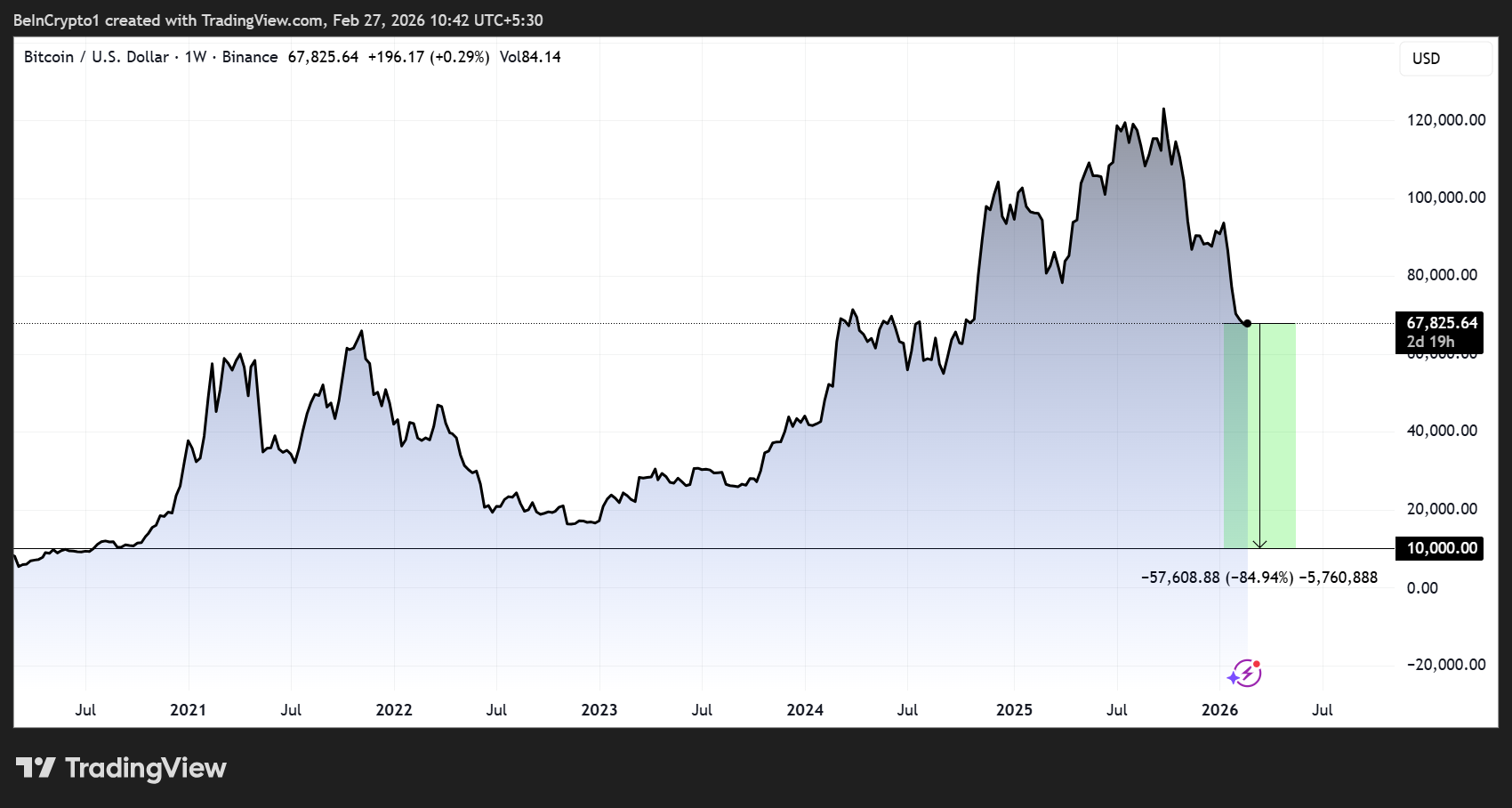
Chart 1: Bitcoin price action showing recent levels (Source: TradingView)
Why Bitcoin Fails as Money, According to Wales
The Wikipedia executive didn’t mince words about Bitcoin’s fundamental shortcomings. He described the cryptocurrency as “speculative at best” and dismissed the notion that adoption by AI systems—a narrative that has gained some traction—will meaningfully impact its utility or value.
“There’s very little reason to think increased accumulation is likely to happen,” Wales wrote, pushing back against arguments that institutional accumulation or ETFs guarantee price stability. “Enthusiasts had best be prepared for the price to decline to hobbyist levels.”
There’s very little reason to think increased accumulation is likely to happen, so enthusiasts had best be prepared for the price to decline to hobbyist levels. It’s not even particularly good as a speculation because the volatility is so high. https://t.co/nXxJv8j7R4
— Jimmy Wales (@jimmy_wales) February 26, 2026
Even in scenarios where authoritarian governments push digital escape alternatives, Wales remains skeptical of Bitcoin’s ability to serve as a meaningful safe haven. “Hard to use, volatile, not accepted as currency anywhere,” he noted. “It’s fine for hobbyists/enthusiasts, but I think gold, silver, jewelry, real estate, and fine art will remain dominant as safe-haven stores of value.”
Hard to use, volatile, not accepted as currency anywhere. It’s fine for hobbyists/enthusiasts, but I think gold, silver, jewelry, real estate, and fine art will remain dominant as safe-haven stores of value. https://t.co/x9UPO7c6o5
— Jimmy Wales (@jimmy_wales) February 26, 2026
The Broader Skepticism: Bitcoin’s Failed Promises
Wales’ critique resonates with a growing chorus of voices pointing to Bitcoin’s inability to fulfill its original promises. The cryptocurrency launched with the vision of peer-to-peer electronic cash, a use case that has largely failed to materialize at scale. When that narrative faded, proponents shifted to Lightning Network as a scaling solution. When adoption remained limited, the store-of-value thesis took center stage.
One user captured this sentiment succinctly: “Bitcoin started as P2P cash. When BTC failed that mission, they pushed Lightning; when that failed, they pushed store of value. Now that’s failed too, and BTC is stuck in limbo.”
Others have gone further, characterizing Bitcoin as primarily a vehicle for speculation between gamblers rather than a legitimate store of value. Jacob Kinge of SwanDesk issued a stark warning: “If anyone has any doubts that we’re entering a brutal bear market, posts like this should be your red flags. Sell everything while you still can. The Bitcoin bubble is over.”
If anyone has any doubts that we’re entering a brutal bear market, posts like this should be your red flags.
Sell everything while you still can.
The Bitcoin bubble is over.
— Jacob King (@JacobKinge) February 24, 2026
Technical Analysis Echoes Caution
Technical analysts have also flagged warning signs that align with the broader skeptical sentiment. Coin Signals noted that Bitcoin failed to hold above the critical 200-week exponential moving average, a level that has historically served as a bear-market floor during major drawdowns in 2015, 2018, and 2020.
“Bitcoin failed to hold above the 200-week EMA and has dropped. The next downside target is in the $58K–$55K range,” the analysis firm observed, suggesting further near-term weakness before any potential recovery.
#Bitcoin failed to hold above the 200-week EMA and has dropped.
The next downside target is in the $58K–$55K range. pic.twitter.com/EgINvgUqRW
— Coin Signals (@CoinSignals_) February 23, 2026
Not Everyone Is Bearish
Despite the chorus of skepticism, not all voices in the crypto community share Wales’ dire long-term outlook. Some caution against overreacting to temporary price dips and cyclical bear markets.
CFA Rajat Soni offered a perspective that distinguishes between short-term volatility and fundamental failure: “They see volatility and immediately think Bitcoin has failed… These people are tourists.” This view suggests that those who understand Bitcoin’s historical patterns recognize that volatility is a feature, not a bug, of early-stage disruptive technologies.
The Hobbyist Future: A Plausible Scenario?
Wales’ forecast occupies a middle ground between Bitcoin maximalists who envision global adoption and skeptics who predict total collapse. He grants that the network will survive—a non-trivial concession given the technological challenges cryptocurrencies face. But he argues that survival does not imply success, and that the price discovery mechanism could ultimately settle at levels far below current expectations.
This “hobbyist” scenario envisions Bitcoin as a persistent but marginal technology, maintained by a dedicated community of enthusiasts and tinkerers, but irrelevant to mainstream finance and daily commerce. In this view, the cryptocurrency follows a trajectory similar to other niche technologies that survive indefinitely without ever achieving mass adoption.
The question Wales poses to investors and enthusiasts is whether they are prepared for such an outcome. If Bitcoin persists primarily as a hobbyist pursuit rather than a cornerstone of global finance, what does that mean for those who have allocated significant portions of their portfolios to it?
Conclusion: A Provocative Challenge to Bitcoin Orthodoxy
Jimmy Wales’ Bitcoin price prediction challenges the fundamental narratives that have driven crypto adoption for over a decade. By acknowledging the network’s technical resilience while dismissing its economic utility, he presents a nuanced critique that avoids the extremes of both maximalism and total skepticism.
For Bitcoin holders, the forecast serves as a reminder that even the most established cryptocurrencies face profound uncertainty about their long-term role. Whether Wales proves prescient or overly pessimistic, his intervention highlights a crucial question that the crypto community must grapple with: If Bitcoin fails as money and as a store of value, what remains?
The answer to that question will determine whether the world’s first cryptocurrency follows Wales’ hobbyist trajectory or continues its improbable ascent into the fabric of global finance.
Sources: Jimmy Wales X posts / TradingView / Coin Signals / Jacob King
Disclaimer: This content is for market information only and is not investment advice.





