

Coin Newsweek – March 5, 2026 – While global markets have been rattled by escalating geopolitical tensions in the Middle East, Ethereum investors have demonstrated remarkable conviction, pulling a record 31.6 million ETH from centralized exchanges in February. This mass exodus, the largest since November, signals a powerful vote of confidence in the asset’s long-term value despite its price hovering near $2,000—60% below last year’s peak.
The accumulation trend has continued into March, with fresh data revealing that exchange reserves have now plummeted to an all-time low. This behavior directly contradicts traditional market wisdom, which would typically expect panic selling during periods of heightened global instability. Instead, investors are moving their assets to private wallets and staking contracts, effectively removing them from liquid supply and betting on Ethereum’s future appreciation.
Visualizing the Exodus: 30-Day Exchange Outflows
The scale of investor migration becomes immediately apparent when examining the 30-day exchange outflow chart. Since early February, outflows have consistently outpaced inflows, with net negative flows dominating the landscape. The data reveals that Binance alone accounted for approximately 14.45 million ETH in outflows—nearly half of the total 31.6 million ETH moved off exchanges during the month.
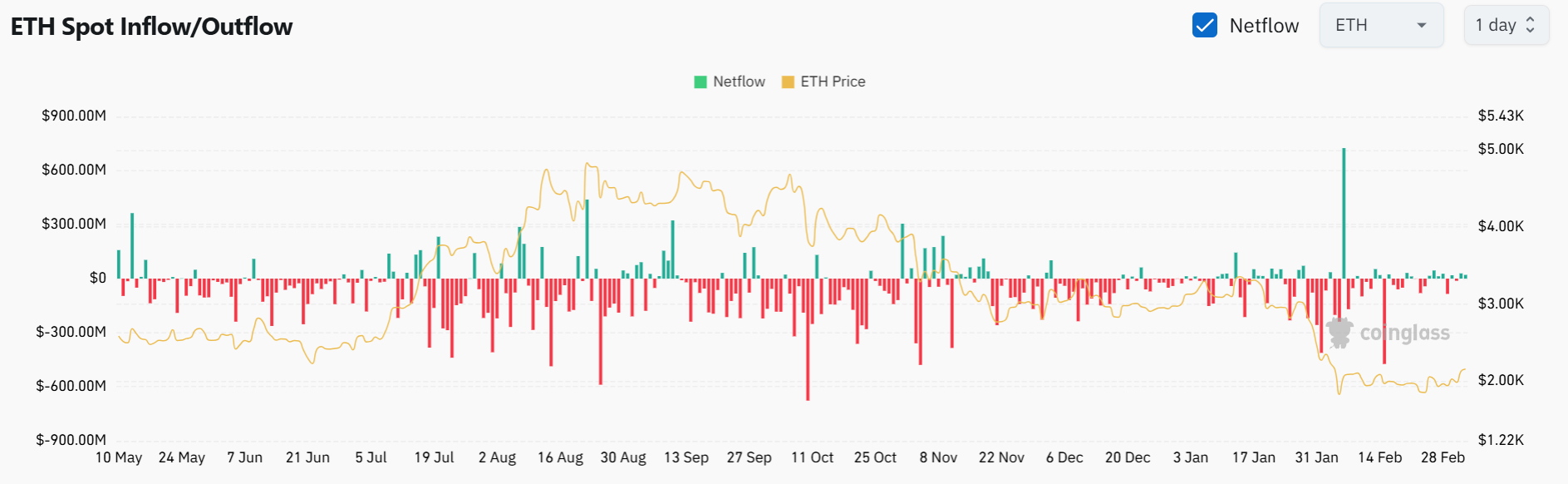
Chart 1: Ethereum spot inflow/outflow showing persistent net outflows as prices stabilize near $2,200 (Source: Coinglass)
The inflow/outflow chart tells a compelling story. Throughout February, the red bars representing net outflows consistently dominated, with particularly heavy withdrawal days coinciding with price stability around the $2,200 level. This pattern suggests that investors view current prices as attractive accumulation opportunities rather than distribution points.
Historical Context: The Long View on Exchange Outflows
The longer-term perspective provided by the multi-year outflow chart reveals that the current accumulation phase is part of a structural shift that began years ago. Since the peak of the 2021 bull market, Ethereum has been steadily migrating from exchanges to private wallets and staking contracts.
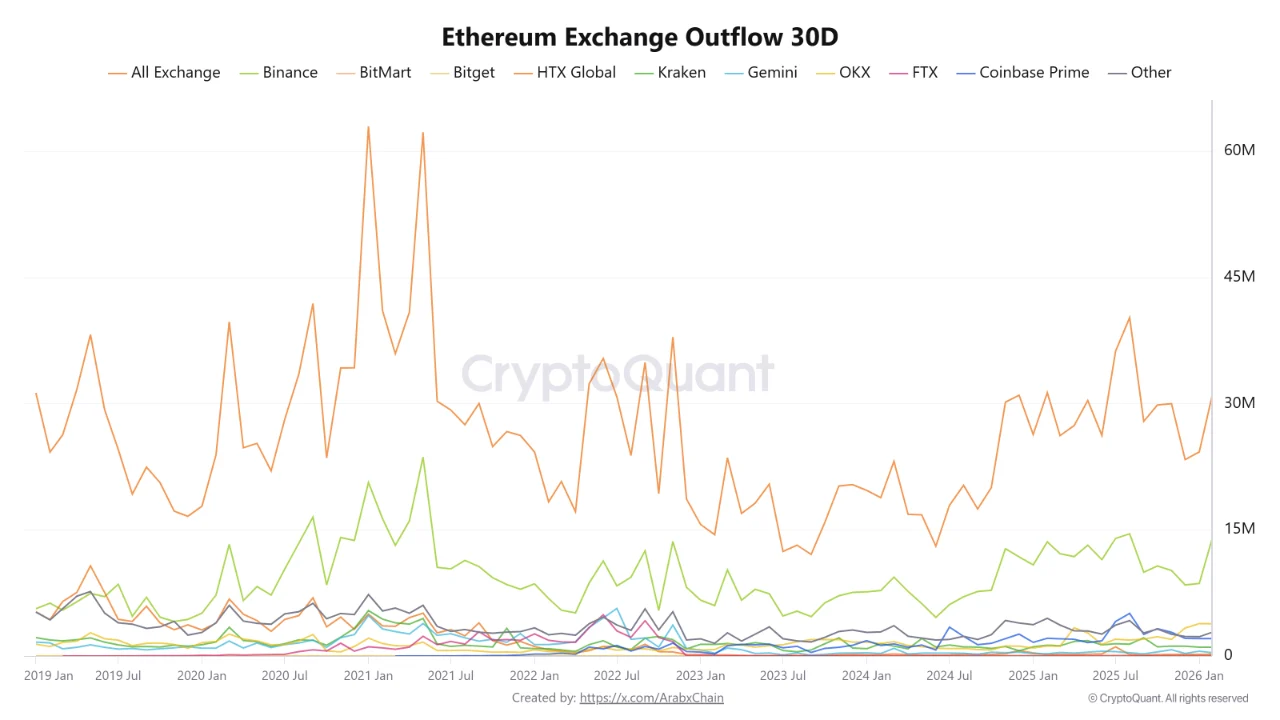
Chart 2: Multi-year Ethereum exchange outflow data showing sustained migration since 2021 (Source: CryptoQuant / ArabicChain)
The chart, created by analyst ArabicChain, shows that while outflows have been a consistent feature since 2021, the current acceleration is notable. Binance, Bitget, and OKX have seen the most significant cumulative outflows, reflecting a broad-based movement across major platforms. This is not merely capital rotating between exchanges; it is capital leaving trading platforms entirely.
Binance Reserves Hit Record Lows
The impact on exchange reserves is most starkly visible when examining Binance’s Ethereum holdings. The exchange reserve chart reveals a dramatic decline in ETH held on the world’s largest trading platform, with reserves now at levels not seen since the early days of the 2021 bull market.
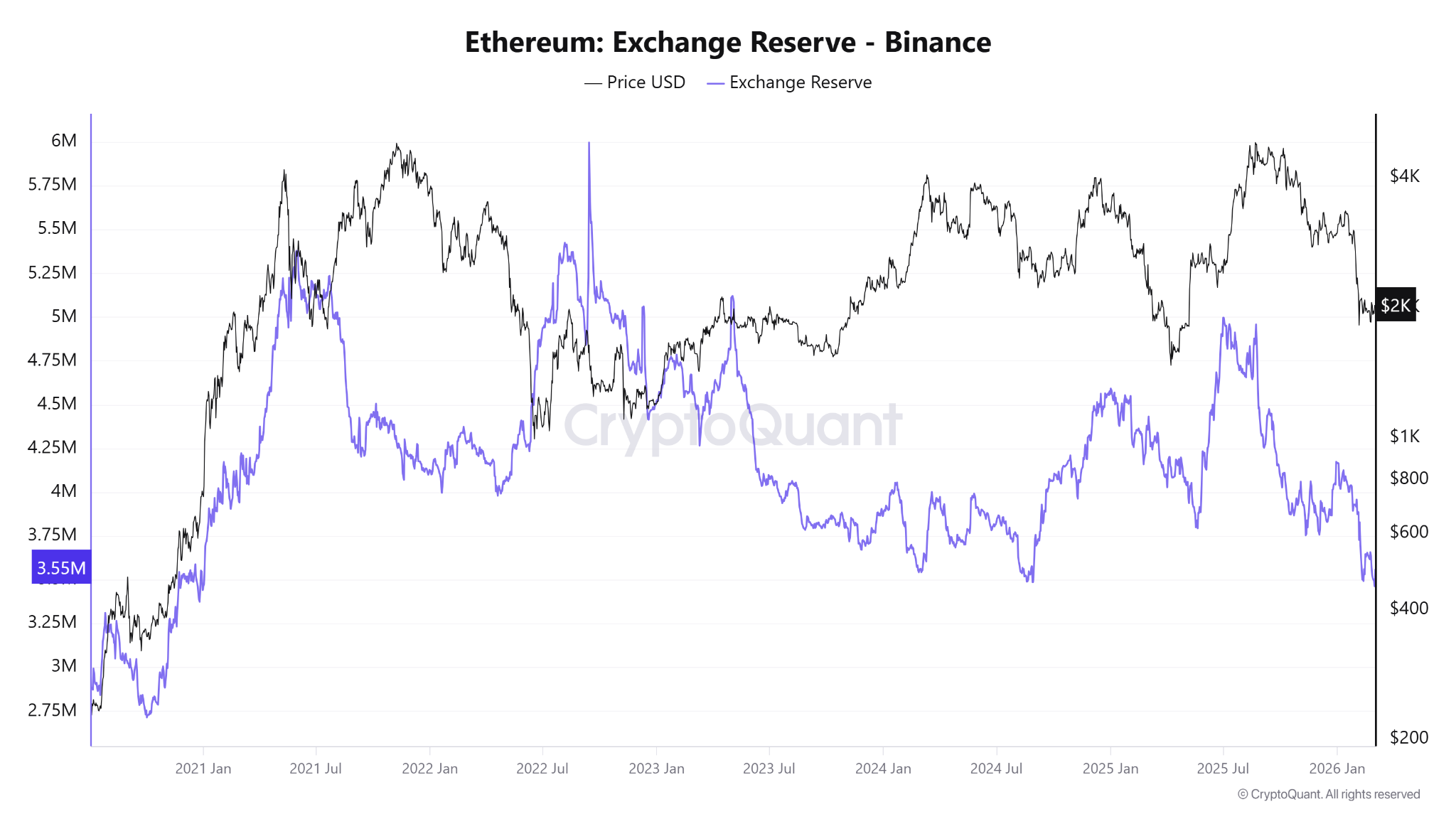
Chart 3: Binance Ethereum reserves decline as price stabilizes, indicating strong holder conviction (Source: CryptoQuant)
The inverse relationship between price and reserves is particularly instructive. As ETH price has stabilized in the $2,000-2,200 range, reserves have continued to decline. This suggests that holders are not waiting for higher prices to sell; they are accumulating at current levels, confident in future appreciation. The blue line representing exchange reserves has been in a near-steady decline since early 2025, with the pace accelerating in recent months.
Where Is the ETH Going? The Validator Queue Explodes
The destination of much of this withdrawn ETH is becoming increasingly clear: the staking ecosystem. The validator queue chart reveals a dramatic surge in both entry and exit activity, but with entries massively outpacing exits.
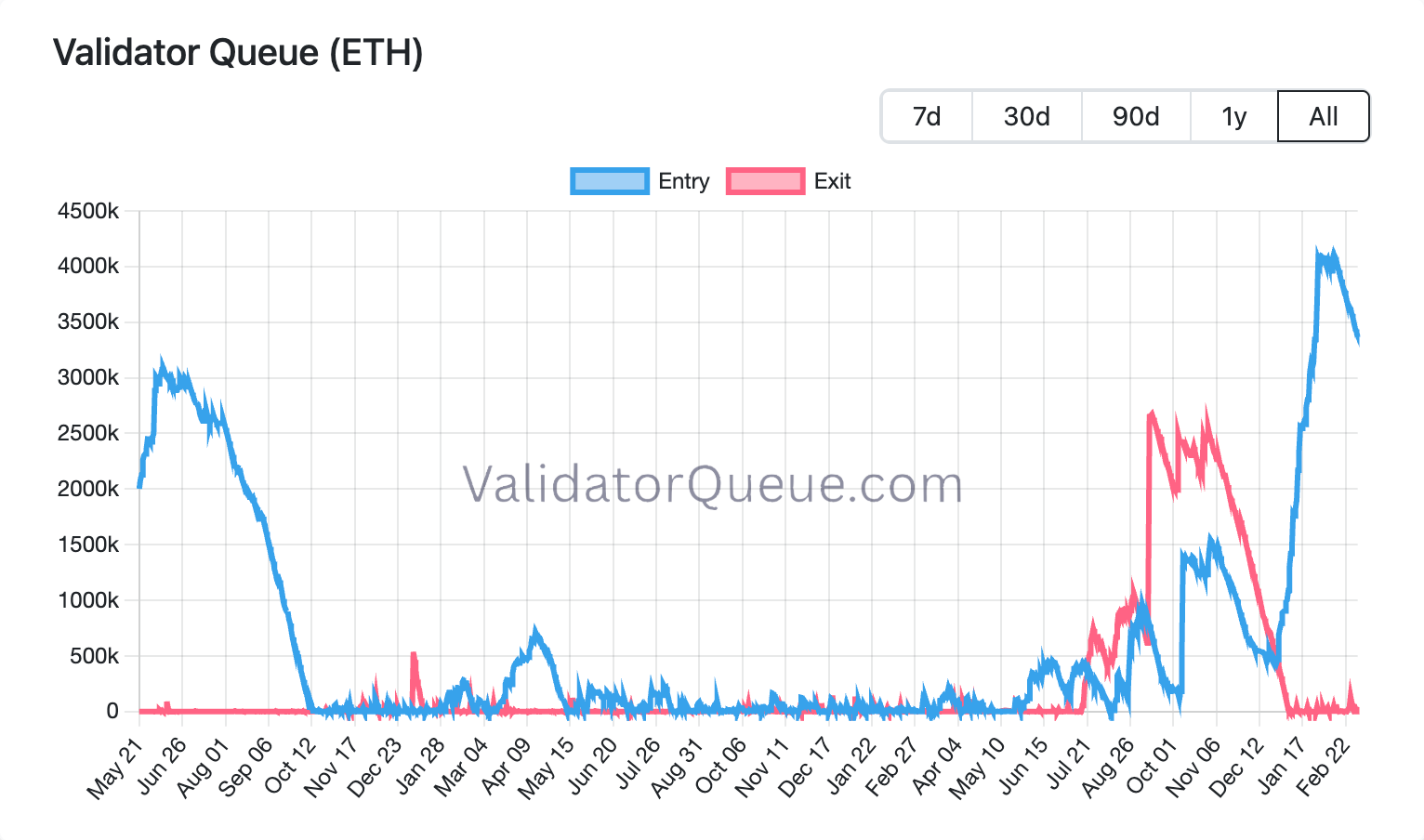
Chart 4: Ethereum validator queue shows sustained entry demand, indicating long-term holder commitment (Source: ValidatorQueue.com)
The validator queue data tells a powerful story about investor intent. Throughout late 2025 and early 2026, the number of validators waiting to enter the network has remained consistently elevated, while exit queues have been minimal. This indicates that investors withdrawing from exchanges are not simply moving to cold storage; they are actively participating in network security through staking, earning yield while committing to long-term holding.
The green spikes representing entry demand far outpace the red exit spikes, suggesting that the overwhelming majority of ETH holders view staking as an attractive long-term proposition rather than a temporary commitment. This aligns with the broader narrative of Ethereum transitioning to a yield-bearing asset that rewards long-term holders.
What This Means for Ethereum’s Future
The convergence of these four data streams—persistent net outflows, multi-year migration trends, declining exchange reserves, and surging validator queues—creates a compelling picture of investor behavior. Ethereum is being systematically withdrawn from liquid trading venues and committed to long-term holding and staking.
This structural shift has profound implications for price discovery. With a growing percentage of the circulating supply locked in staking contracts and private wallets, the available liquid supply continues to shrink. All else being equal, this supply squeeze should eventually put upward pressure on prices if demand remains constant or increases.
Moreover, the behavior of investors during this period of geopolitical stress suggests that Ethereum is maturing as an asset class. Rather than panicking at the first sign of global instability, holders are demonstrating the kind of conviction typically associated with gold and other traditional stores of value. This resilience could attract institutional investors who have been waiting for evidence that digital assets can weather turbulent times.
As one analyst noted, “The fact that investors are accumulating during a war, rather than selling, tells you everything about how they view Ethereum’s role in an uncertain world. They’re not betting on short-term price movements; they’re betting on a different future.”
Sources: CryptoQuant / Coinglass / ValidatorQueue.com / Lookonchain
Disclaimer: This content is for market information only and is not investment advice.





