
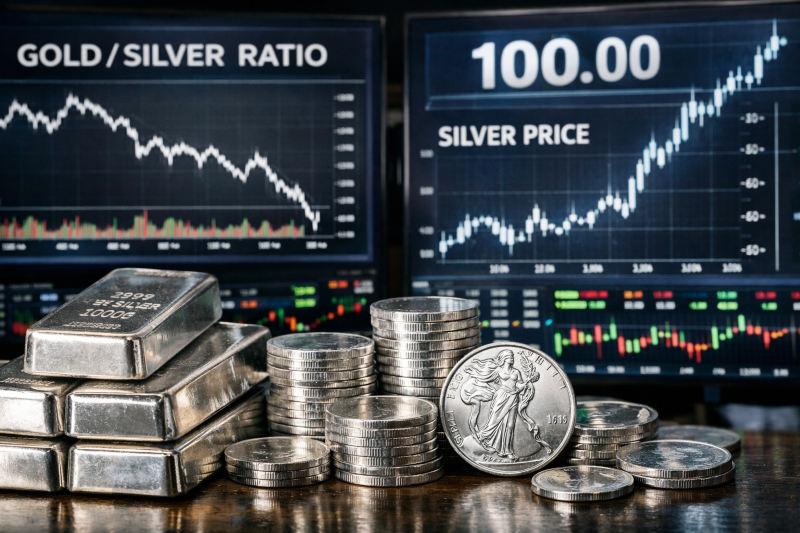
Coin Newsweek – February 26, 2026 – Deutsche Bank has signaled a potentially significant upside for silver prices, with analyst Michael Hsueh pointing to a confluence of technical and sentiment indicators that suggest the white metal could outperform current expectations. In a recent note, Hsueh highlighted that silver’s recent price action is beginning to deviate from historical patterns, creating upside risk to the bank’s year-end forecast of $100 per ounce.
“White metals have recently begun to outperform gold again, a move that is beginning to defy the neat and tidy historical template of silver outperformance followed by a partial retracement,” Hsueh wrote. This observation suggests that the current rally may have more durability than previous episodes, potentially extending gains beyond typical patterns.
The gold-silver ratio, a key metric that measures how many ounces of silver are required to purchase one ounce of gold, has fallen to 57. This level sits below Deutsche Bank’s longer-term assumption range of 60–65 for end-2026 and 2027. A declining ratio indicates that silver is outperforming gold, as fewer silver ounces are needed to buy the same amount of gold.
Hsueh noted that sentiment indicators remain notably strong, with the silver three-month risk reversal climbing to its highest level of the year—and, notably, reaching a new 20-year high. Risk reversals measure the difference in implied volatility between out-of-the-money call and put options, with elevated readings suggesting increased demand for upside protection and bullish sentiment.
Adding to the constructive outlook, the analyst pointed to the resumption of Shanghai M1-M2 backwardation in silver following the Lunar New Year holiday. Backwardation, a condition where spot prices exceed futures prices, indicates immediate physical demand strength. Hsueh noted that current backwardation levels remain above those seen in January, suggesting sustained physical buying pressure in the Chinese market.
Together, these signals “present upside risk to our year-end silver forecast of $100/oz, based on a gold-silver ratio of 60,” Hsueh wrote. The $100 target itself represents a significant milestone, implying continued strength in silver prices through the remainder of 2026.
The analyst placed silver’s recent moves within a broader context of precious metals strength, noting that white metals have resumed outperforming gold even as previously elevated silver and platinum lease rates have eased. This normalization in leasing markets suggests that the recent price action reflects genuine investment demand rather than temporary financing-driven distortions.
Speaking more broadly, Hsueh also flagged changing dynamics in the precious metals complex, highlighting that gold has recently crossed back into outperformance versus the U.S. dollar based on its trailing 60-day beta. Beta measures an asset’s sensitivity to broader market movements; a return to outperformance versus the dollar suggests gold is reasserting its status as a currency hedge.
He characterized this as an encouraging development for the bank’s constructive gold view, even while noting there is “still a long way to go before matching the outperformance seen in the last two years.” The reference to recent gold strength provides context for silver’s even more pronounced gains, as silver often exhibits higher volatility and greater sensitivity to precious metals trends.
Hsueh added that if gold were to resume a similar degree of outperformance versus the dollar as seen previously, it would be more consistent with gold reaching $6,900 per ounce, compared with its base forecast of $6,000. This potential upside in gold would likely provide additional support for silver prices, given the historical correlation between the two metals.
The combination of record-high sentiment indicators, physical market strength in China, and a gold-silver ratio breaking below historical ranges creates what Deutsche Bank views as a compelling setup for silver. For investors, the analysis suggests that the white metal’s recent gains may be part of a more sustained trend rather than a temporary overshoot.
Market participants will now watch for confirmation signals, including continued strength in the Shanghai physical premium and sustained elevated risk reversals. Any pullback in the gold-silver ratio toward the 60–65 range would test the durability of silver’s relative strength, while further declines would reinforce the bullish thesis.
As 2026 progresses, Deutsche Bank’s $100 year-end target for silver will serve as a benchmark for evaluating the metal’s performance. With sentiment indicators at multi-decade highs and physical markets showing sustained strength, the conditions appear aligned for silver to potentially exceed even this elevated forecast.
Sources: Deutsche Bank / Michael Hsueh analysis
Disclaimer: This content is for market information only and is not investment advice.





