
28 US Lawmakers Demand Permanent Ban on Central Bank Digital Currencies
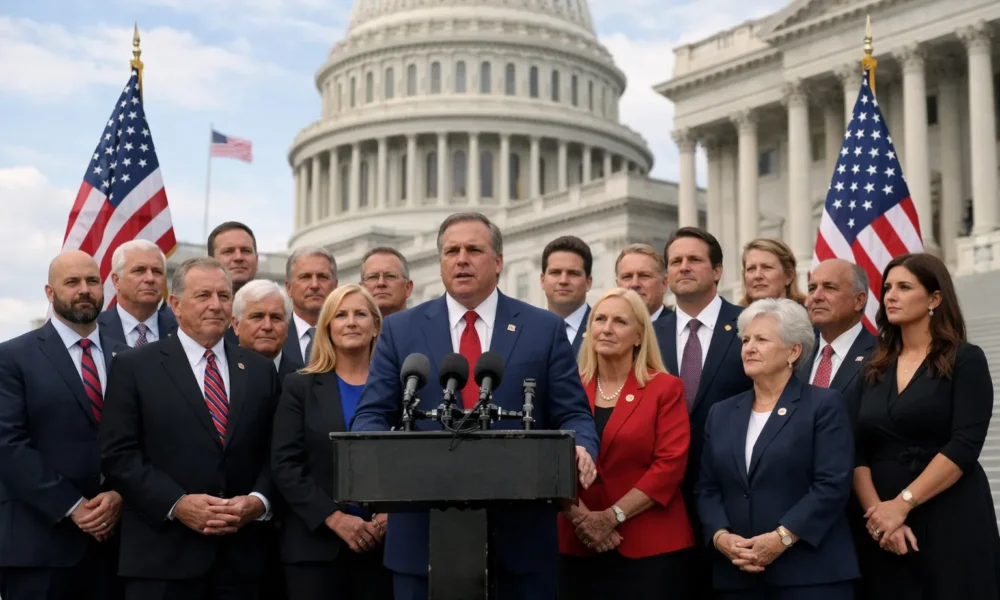
Table Of Content
Coin Newsweek – March 8, 2026 – A coalition of 28 U.S. lawmakers has escalated the battle over the future of digital money, demanding a permanent ban on the issuance of a central bank digital currency (CBDC). In a letter sent to congressional leadership, the group, led by Representative Michael Cloud (R-Texas), argues that current legislative proposals only delay the threat rather than eliminate it.
The letter warns that a CBDC would function as a tool for “unconstitutional financial surveillance,” granting unelected bureaucrats unprecedented power over Americans’ financial lives. The lawmakers argue that any version of a digital dollar issued directly by the Federal Reserve would fundamentally threaten civil liberties and must be stopped “before it’s too late.”
Temporary Ban Not Enough
The immediate trigger for the letter is a provision tucked into the sprawling 300-page “21st Century ROAD to Housing Act” (H.R. 6644), a bipartisan Senate bill primarily focused on housing supply and regulatory reform. The amendment, introduced by the Senate Banking Committee, would prohibit the Federal Reserve from issuing a CBDC until December 31, 2030.
Representative Cloud and his colleagues argue this “sunset provision” is dangerously insufficient. “The ban on central bank digital currency must be permanent,” the letter states. They are calling for the adoption of the stricter language found in the previously passed “Anti-CBDC Surveillance State Act” (H.R. 1919), which would impose a lasting prohibition.
The ‘Anti-CBDC Surveillance State Act’ Precedent
The lawmakers are pointing to H.R. 1919, introduced by House Majority Whip Tom Emmer (R-MN), as the gold standard for digital dollar legislation. That bill, which passed the House in July 2025, would permanently bar the Fed from offering accounts or services directly to individuals and prohibit the issuance of a CBDC, either directly or indirectly through intermediaries.
The “Anti-CBDC Surveillance State Act” was crafted to prevent what its backers describe as a “Chinese Communist Party-style surveillance system,” where the government could monitor or “de-platform” individual spending. It explicitly carves out an exception for private, open, permissionless digital assets, ensuring stablecoins remain unaffected.
Why Lawmakers Fear a Digital Dollar
The core of the opposition centers on privacy and control. Unlike physical cash, which offers anonymity, a CBDC would create a centralized ledger of every transaction, potentially accessible to the government.
“Unlike cash, it could enable the government to trace transactions and monitor how Americans spend their money,” Representative Ralph Norman (R-SC) wrote on X, echoing the letter’s sentiment. The lawmakers warn that a CBDC opens the door to “programmable money,” where the state could theoretically restrict how or when citizens spend their funds, or even freeze assets.
Representative Cloud’s letter is blunt about the stakes: “Issuing a U.S. central bank digital currency is essentially anti-American.”
Housing Bill Held Hostage?
The demand places the broader, bipartisan housing package in jeopardy. The 18 House Republicans who signed the letter have effectively threatened to block the popular housing legislation unless their terms on the CBDC ban are met.
They argue that the temporary moratorium in the Senate bill is a “watered-down version” of Emmer’s act and must be strengthened. The lawmakers expressed frustration that promises made by House leadership eight months ago to attach a permanent ban to must-pass legislation have gone unfulfilled.
The Global Context
This push for a permanent ban puts the U.S. on a collision course with global financial trends. While American lawmakers move to block a digital dollar, more than 130 other countries are actively exploring or developing CBDCs. China’s digital yuan (e-CNY) is already in advanced pilot phases, accounting for the vast majority of transactions on international platforms, and the European Central Bank is moving forward with a digital euro, targeting a 2029 launch.
Critics of a permanent ban argue it would cede financial innovation to geopolitical rivals like China and leave the U.S. behind in the next evolution of money. However, supporters of the ban contend that financial privacy is a fundamental right worth protecting, even at the cost of innovation.
What’s Next
The Senate bill is currently advancing, having passed a procedural vote with strong bipartisan support. However, the fate of the housing package remains uncertain as it heads to the House, where the Republican proponents of the permanent ban are vowing to fight.
For now, the 28 lawmakers have drawn a clear line in the sand: no permanent ban, no deal. The coming weeks will reveal whether the demand for permanent prohibition on a digital dollar can be reconciled with the urgent need for housing reform.
Sources: Cointelegraph / Congress.gov / Representative Michael Cloud letter / BeInCrypto
Disclaimer: This content is for market information only and is not investment advice.