

Coin Newsweek – February 27, 2026 – The cryptocurrency market is bracing for the largest derivatives event of February as over $8.72 billion in Bitcoin and Ethereum options reach their expiration today. With both assets trading significantly below their respective “max pain” levels and volatility metrics flashing mixed signals, traders are preparing for potential market turbulence as settlement unfolds.
Bitcoin dominates the expiry with 114,705 contracts representing approximately $7.74 billion in notional value. Ethereum follows with 478,992 contracts worth roughly $975 million. Combined, these expiries account for about 20% of total open interest across both assets, giving them outsized potential to influence spot market dynamics.
The Max Pain Dynamic: Prices Trail Strike Levels
Perhaps the most significant factor heading into today’s expiry is the relationship between current spot prices and the “max pain” level—the strike price at which the greatest number of options expire worthless, causing maximum financial pain for option buyers.
Bitcoin currently trades near $68,052, notably below its max pain threshold of $75,000. Ethereum changes hands around $2,035, trailing its $2,200 max pain level by approximately 7.5%. This dynamic suggests that if prices drift higher toward settlement, a greater number of options could expire worthless, potentially benefiting sellers while punishing buyers who anticipated different price outcomes.
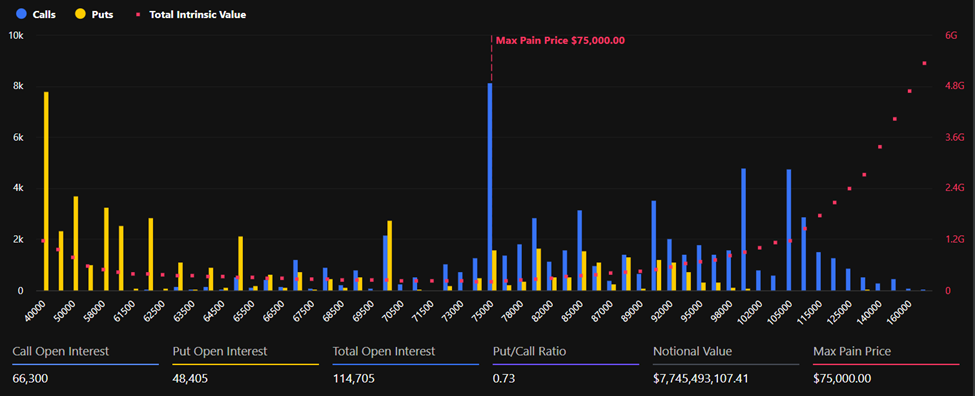
Chart 1: Bitcoin options expiry data showing put-call distribution (Source: Deribit)
Call Options Dominate Open Interest
Examining the composition of open interest reveals a clear bullish bias in positioning heading into expiry. Bitcoin shows 66,300 call contracts versus 48,405 puts, yielding a put-to-call ratio of 0.73. Ethereum’s ratio stands at 0.78, with 268,642 calls and 210,350 puts outstanding.
This call dominance suggests that many traders positioned for higher prices, leaving them potentially vulnerable if the max pain dynamic plays out. Deribit analysts note that Bitcoin carries the significantly larger notional weight into settlement, which could amplify spot sensitivity if hedging flows intensify during the expiry process.
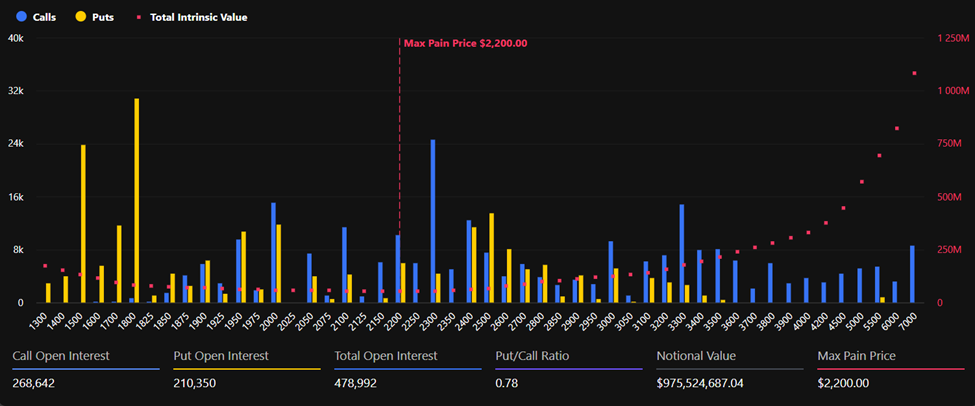
Chart 2: Ethereum options expiry data showing put-call distribution (Source: Deribit)
Volatility Divergence Reveals Market Unease
Beyond the expiry itself, volatility metrics paint a nuanced picture of market sentiment. Bitcoin’s DVOL index, which measures expected future volatility, currently sits at 53 with an implied volatility percentile of 87.7—meaning volatility expectations are elevated relative to historical norms. This suggests options markets are pricing heightened uncertainty around Bitcoin’s near-term price action.
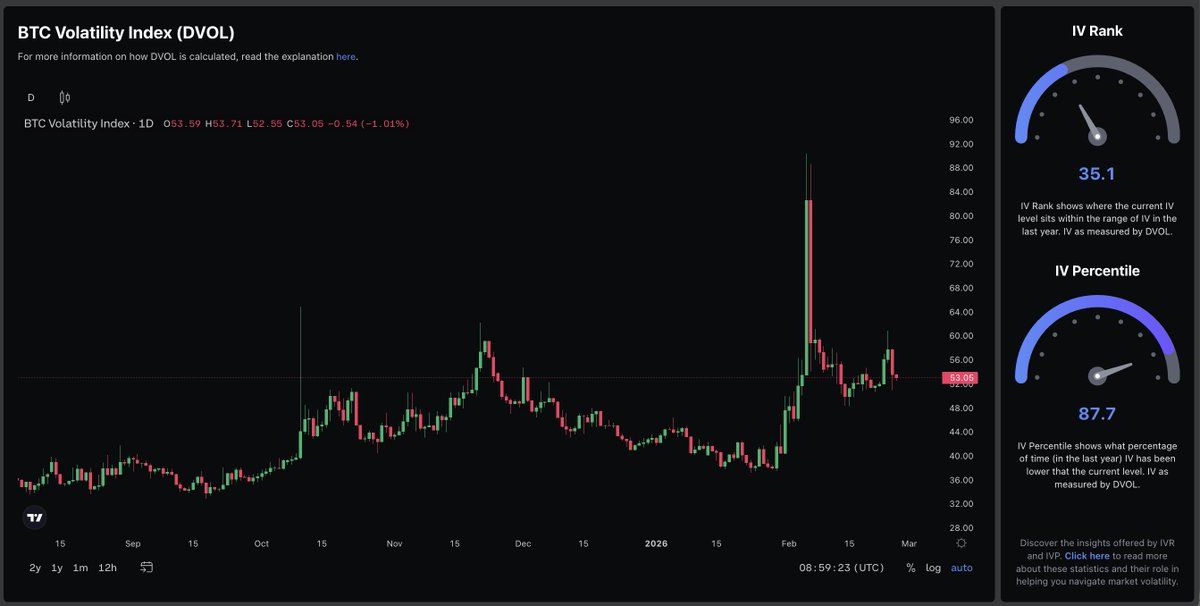
Chart 3: Bitcoin DVOL at 53 with 87.7% IV percentile (Source: Deribit)
Ethereum presents a contrasting picture. While its DVOL is higher in absolute terms at 70, the IV percentile of 55.7 indicates that current volatility expectations are less extreme relative to Ethereum’s own historical behavior. This divergence suggests that while Ethereum remains inherently more volatile than Bitcoin, the recent price action hasn’t pushed volatility expectations to unusual extremes.
Deribit’s analysis highlights that Ethereum volatility is running approximately 15-20 points above Bitcoin across the entire curve, indicating traders are pricing materially higher uncertainty across ETH maturities. The term structure remains in contango for both assets, with a front-end volatility premium concentrated around the February expiry.
A deeper look at tomorrow's February-end expiry.
BTC DVOL is currently sitting at 53 with an IV percentile of 87.7 – elevated relative to historical data.
ETH DVOL is at 70 but IV percentile of just 55.7 – high in absolute terms but unremarkable historically.
Vol is being… pic.twitter.com/8zS4LWHLV2
— Deribit (@DeribitOfficial) February 26, 2026
Fear Unwinds, But Conviction Remains Fragile
Earlier this month, both Bitcoin and Ethereum witnessed their 25-delta skew plunge toward -30, reflecting intense demand for downside protection as prices slid sharply. This extreme negative skew signaled that options traders were aggressively hedging against further declines.
Since then, skew has steadily recovered to around -8 to -9, indicating that panic hedging has eased considerably. However, the persistence of negative skew reveals that the market has not fully shaken off its defensive posture. Traders remain cautious, unwilling to embrace bullish positioning despite the recent stabilization.
Greeks.live, a prominent options analytics platform, describes the broader market as sluggish despite the apparent improvement in sentiment metrics. In early February, Bitcoin briefly tested the psychological $60,000 threshold and has since oscillated weakly above it, failing to mount a convincing recovery.
February 27 Options Expiration Data
116,000 BTC options expired, with a Put-Call Ratio of 0.76, maximum pain point at $75,000, and notional value of $7.9 billion.
206,000 ETH options expired, with a Put-Call Ratio of 0.77, maximum pain point at $2,200, and notional value of $980… pic.twitter.com/2Zpe9DIx76— Greeks.live (@GreeksLive) February 26, 2026
Price Action and Market Confidence
While a recent two-day rebound lifted implied volatility—with Bitcoin main-term IV climbing to 47% and Ethereum to 65%—confidence behind the move remains thin. Greeks.live notes that “the downward price trend has eased, but market confidence remains insufficient.”
Interestingly, large-block call options have dominated recent trading activity, particularly in medium- to long-term maturities. This suggests that some sophisticated investors are positioning for a eventual recovery, even as broader market sentiment stays cautious. The rebound in skew metrics indicates emerging bottom-fishing activity, but analysts caution that the market remains firmly in bear territory.
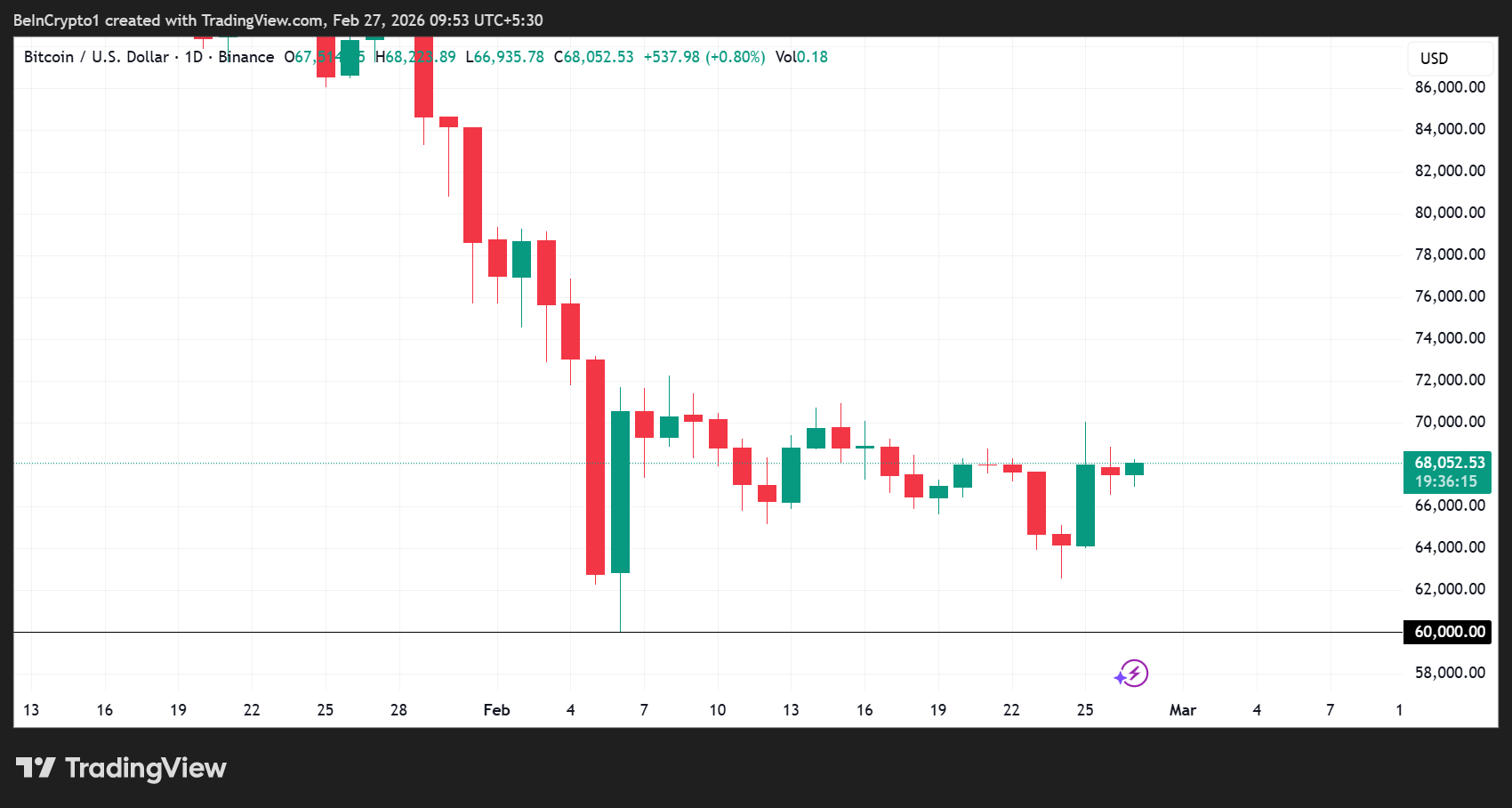
Chart 4: Bitcoin price action showing recent rebound from $60,000 levels (Source: TradingView)
The Capital Flow Problem: No Fresh Catalyst in Sight
Perhaps the most concerning element highlighted by analysts is the lack of fresh capital inflows and clear catalysts for a sustained recovery. Despite the easing of extreme fear, pessimistic narratives continue to dominate social channels and trading discussions.
Greeks.live argues that the crypto market lacks the fundamental drivers typically required for a sustained trend reversal. Without meaningful new capital entering the ecosystem, any rebound remains vulnerable to selling pressure from existing market participants.
The firm’s assessment underscores a critical point: while sentiment has improved from panic levels, it has not yet transitioned to genuine conviction. The market appears to be in a holding pattern, waiting for either a catalyst to emerge or for prices to reach levels that attract fresh demand.
What Today’s Expiry Could Mean for Prices
With both Bitcoin and Ethereum trading well below their max pain levels, the path of least resistance heading into settlement may be higher. As expiration approaches, market makers and options sellers have incentives to push spot prices toward the max pain level, where their liabilities are minimized.
If prices gravitate higher, a greater number of call options could expire worthless, potentially benefiting sellers while punishing bullish speculators. Such an outcome would constitute a classic “pain trade”—a market move that causes maximum discomfort to the largest number of traders.
However, the subdued demand environment could also allow volatility to compress after expiry, with derivatives markets pricing less panic but not yet signaling a return of confidence. The coming days will reveal whether today’s expiry acts as a catalyst for directional movement or simply passes with minimal market impact.
For now, traders remain positioned cautiously, watching to see whether the max pain dynamic plays out or whether the market’s recent stabilization can build into something more substantial. With $8.72 billion in options set to expire, today’s settlement will provide important signals about market structure and trader positioning heading into March.
Sources: Deribit / Greeks.live / TradingView
Disclaimer: This content is for market information only and is not investment advice.





