
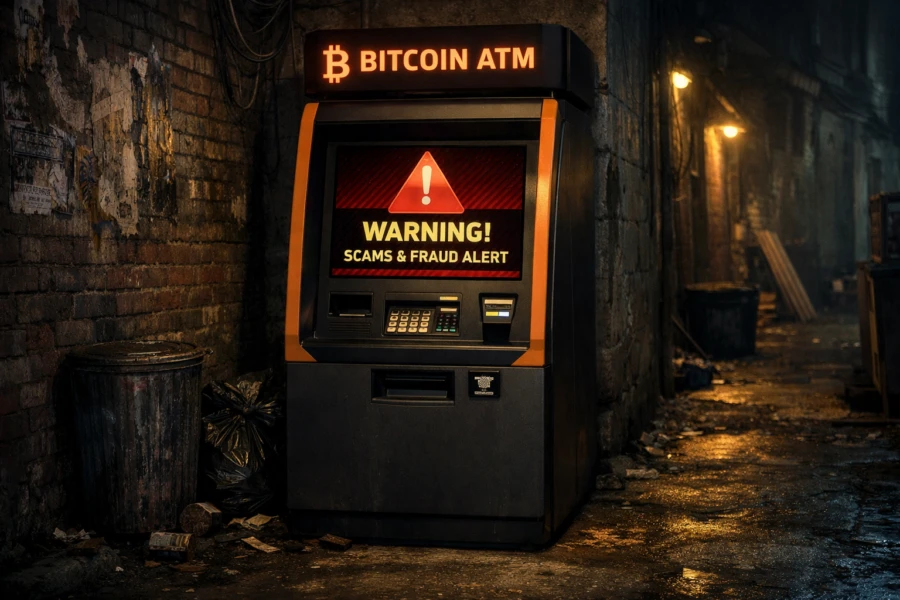
Coin Newsweek – February 27, 2026 – Minnesota lawmakers have taken decisive action against cryptocurrency self-service terminals, introducing legislation that would impose a statewide ban on the installation and operation of these increasingly controversial machines. The bill, designated HF 3642 and introduced by Representative Erin Koegel this week, represents one of the most aggressive regulatory responses to crypto kiosks in the United States.
The legislation was formally submitted to the House Committee on Commerce, Finance and Policy on Thursday. If passed, it would not only ban new terminals but also repeal approximately twenty existing regulations related to cryptocurrency kiosks, effectively creating a clean regulatory slate while prohibiting the machines entirely.
The Minnesota Department of Commerce has thrown its weight behind the proposal, expressing “strong support” for the bill. Department officials have indicated they plan to submit a broader consumer protection package in the coming days that incorporates this ban alongside other protective measures targeting emerging financial technologies that have demonstrated consumer harm.
Law Enforcement: Kiosks Becoming Primary Tool for Scammers
Testimony from law enforcement agencies has been particularly damning. Police officials have testified that cryptocurrency self-service terminals have evolved into a primary tool for scammers targeting vulnerable residents, particularly the elderly and those less familiar with digital currency technology. The machines, which allow users to convert cash to cryptocurrency with minimal oversight, have proven attractive to fraudsters who can direct victims to deposit funds with little chance of recovery.
Sam Smith, Director of Government Relations at the Minnesota Department of Commerce, provided stark statistics illustrating the scope of the problem. According to Smith, the agency received 70 complaints related to cryptocurrency self-service terminals during the last year alone, with victims reporting total losses of approximately $540,000. These figures likely understate the true impact, as many scams go unreported due to embarrassment or lack of awareness about reporting mechanisms.
Perhaps most troubling is the recovery rate for victims. Smith testified that only about 48% of consumers who filed complaints received any refund at all, and those who did recovered an average of just 16% of their total losses. This means that for every dollar stolen through these machines, victims can expect to recover barely fifteen cents—a devastating outcome for those who have lost life savings or retirement funds to sophisticated scammers.
Current Landscape: 350 Licensed Terminals in Minnesota
Minnesota currently hosts approximately 350 licensed cryptocurrency self-service terminals, operated by between eight and ten companies. These machines are typically located in convenience stores, gas stations, and other retail locations, making them easily accessible to potential victims. The proposed ban would effectively shutter this entire industry segment within the state, forcing operators to remove existing machines and cease all related activities.
The industry has grown rapidly in recent years, with cryptocurrency ATMs and kiosks appearing in communities across the country. Proponents argue that they provide essential access to digital currency for unbanked populations and those who prefer cash transactions. However, regulators and law enforcement increasingly view them as vectors for fraud, money laundering, and other illicit activities.
Consumer Protection vs. Innovation: The Regulatory Debate
The Minnesota bill highlights the ongoing tension between consumer protection and technological innovation. While cryptocurrency advocates argue that self-service kiosks provide legitimate financial access and should be regulated rather than banned, consumer protection authorities contend that the machines’ design inherently facilitates fraud that cannot be adequately addressed through conventional regulation.
The proposed repeal of existing regulations alongside the ban suggests that Minnesota lawmakers view the entire category as fundamentally flawed rather than simply in need of better oversight. By starting with a clean slate while prohibiting the machines entirely, the legislation would prevent any future attempts to reintroduce crypto kiosks under revised regulatory frameworks.
What This Means for Crypto Kiosk Operators
For the eight to ten companies currently operating licensed terminals in Minnesota, the bill represents an existential threat. These businesses would be forced to remove their machines, absorb the associated costs, and potentially lay off employees who support the kiosk operations. Some may challenge the legislation in court, arguing that it unfairly singles out cryptocurrency businesses and violates constitutional protections.
However, the strong evidentiary record of consumer harm, combined with the Department of Commerce’s enthusiastic support, suggests that the bill has a strong chance of passage. Lawmakers who might otherwise be skeptical of banning a technology may be persuaded by the concrete numbers: 70 complaints, $540,000 in losses, and a mere 16% average recovery rate for victims.
Broader Implications for Crypto Regulation
Minnesota’s aggressive stance could influence other states considering similar measures. If HF 3642 becomes law, it may provide a template for jurisdictions seeking to address fraud through cryptocurrency kiosks without attempting to craft complex regulatory schemes. The clear-cut approach—ban the machines entirely—has the virtue of simplicity, even if it sacrifices the potential benefits that legitimate operators might provide.
The bill also reflects growing frustration among regulators with the difficulty of policing cryptocurrency transactions. Unlike traditional financial systems, where intermediaries can freeze suspicious accounts and reverse fraudulent transactions, cryptocurrency’s pseudonymous and irreversible nature makes consumer protection particularly challenging once funds have been deposited into kiosks.
What’s Next for HF 3642
The bill now resides with the House Committee on Commerce, Finance and Policy, where it will undergo initial review and potentially hearings. If approved by the committee, it would proceed to the full House for consideration. The Department of Commerce’s promised broader consumer protection proposal, expected in the coming days, may accompany the bill through the legislative process or move separately.
For Minnesota residents, particularly those who have used or relied upon cryptocurrency kiosks, the coming months will determine whether these machines remain available or become a footnote in the state’s regulatory history. For the broader cryptocurrency industry, the bill serves as a warning that the window for self-regulation and consumer protection may be closing, as lawmakers increasingly turn to prohibition when oversight proves insufficient.
Sources: The Block / Minnesota Department of Commerce / HF 3642 bill text
Disclaimer: This content is for market information only and is not investment advice.





